How to plan a calm, modern kitchen with character
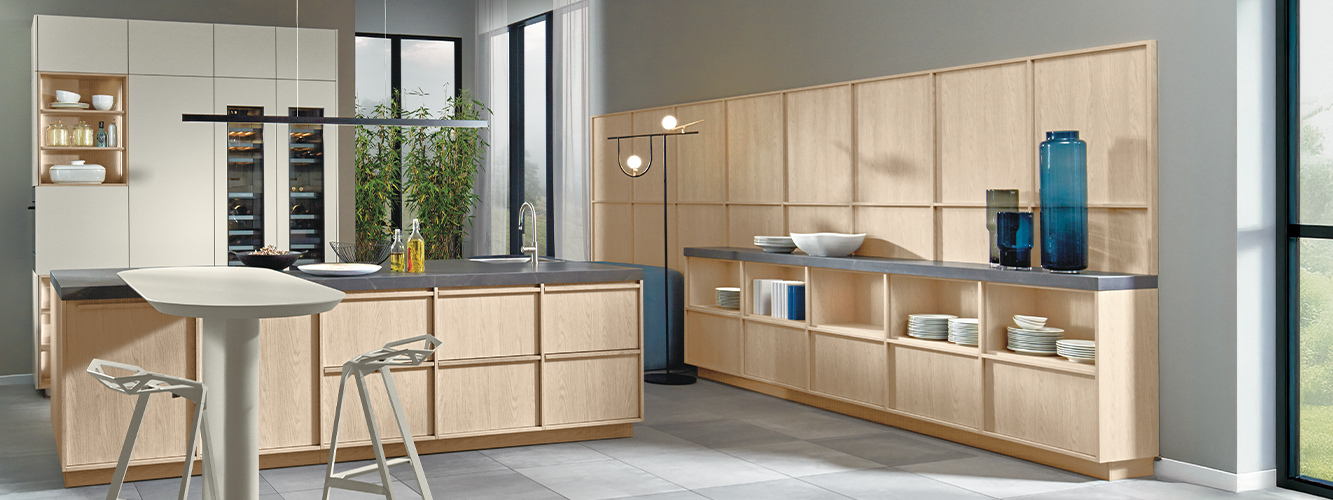
A Japandi kitchen combines Japanese clarity with Scandinavian warmth. The result is a style that feels pared-back, high-quality and homely – making it a perfect fit for modern kitchens. If you are looking for a kitchen that looks timeless and brings a sense of calm to everyday life, the Japandi style is an especially harmonious choice.
But what exactly defines a Japandi-style kitchen? Which colours, materials and shapes work best? And how do you create the look in a way that feels inviting rather than cold?
What is a Japandi kitchen?
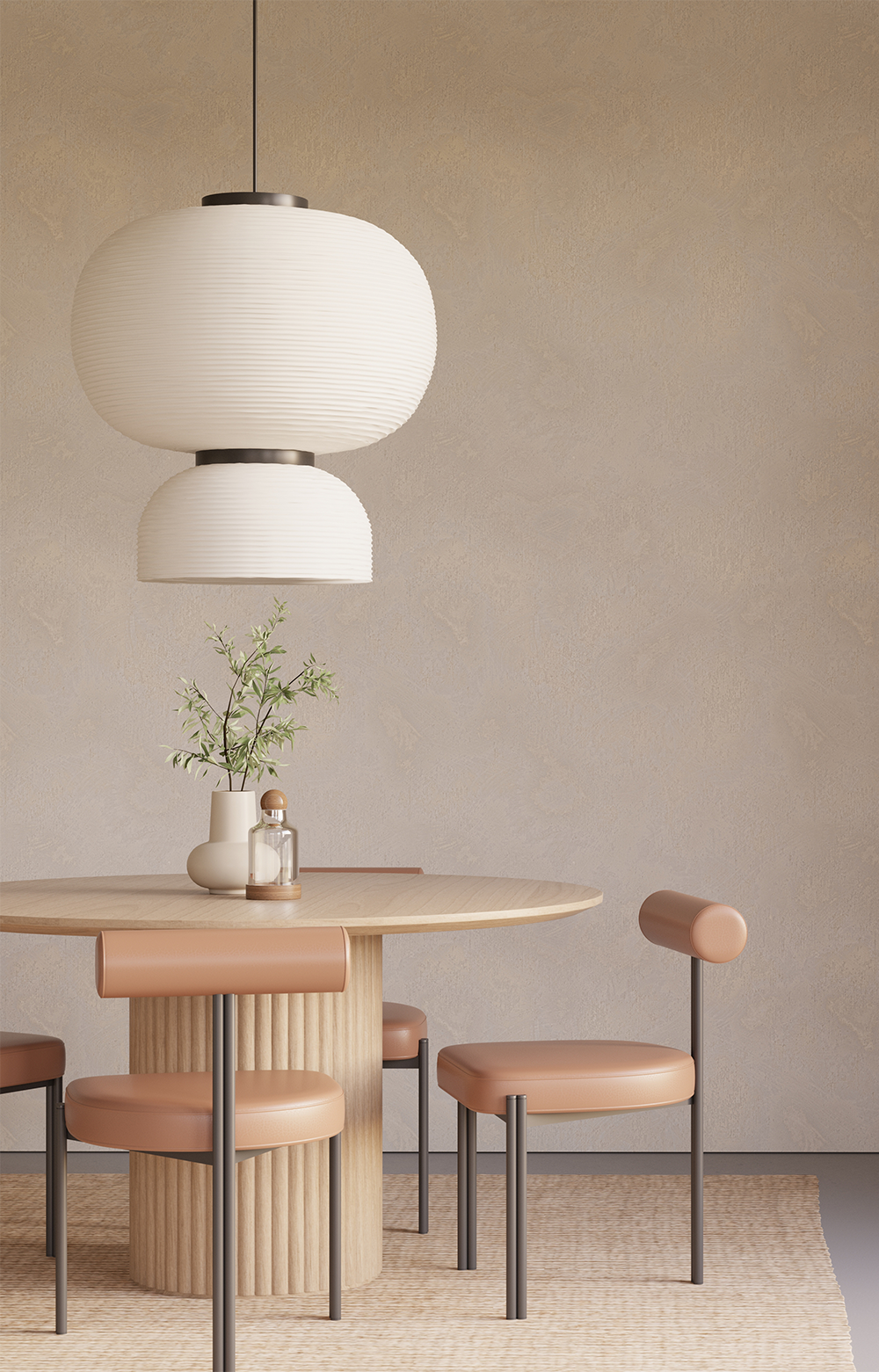
The Japandi style brings together two design worlds that complement each other perfectly: Japanese minimalism and Scandinavian naturalness. Both stand for calm, functionality and clear design. In the kitchen, this is reflected in a reduced design language, natural materials, soft colours and an overall uncluttered appearance. A Japandi kitchen looks modern, but never cold.
How to recognise a Japandi-style kitchen
Calm colours
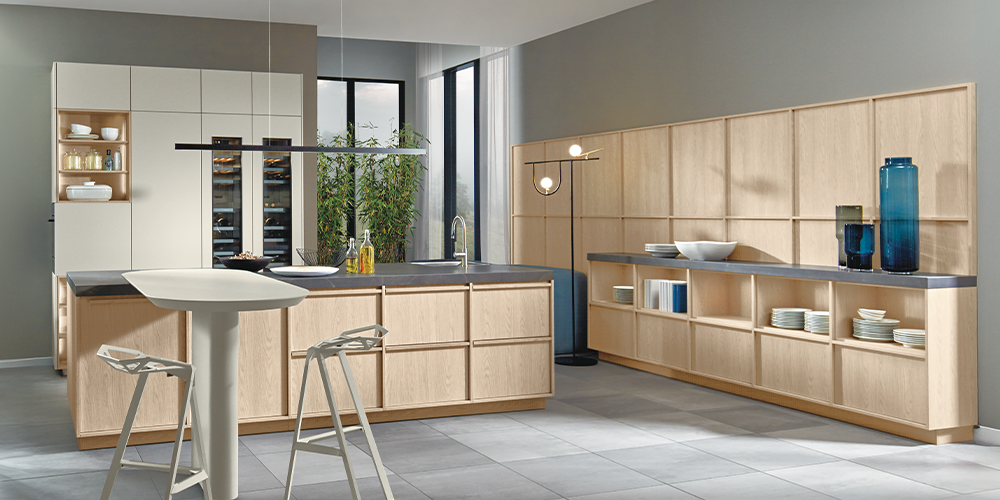
Warm, natural shades such as beige, greige, white or soft greys are typical. These colours feel understated and create a relaxed atmosphere.
Natural materials
Wood, glass, ceramic, stone and matt surfaces define the look. A high-quality material feel is especially important here. The focus is not on decoration, but on the quality of the materials themselves.
Clean lines
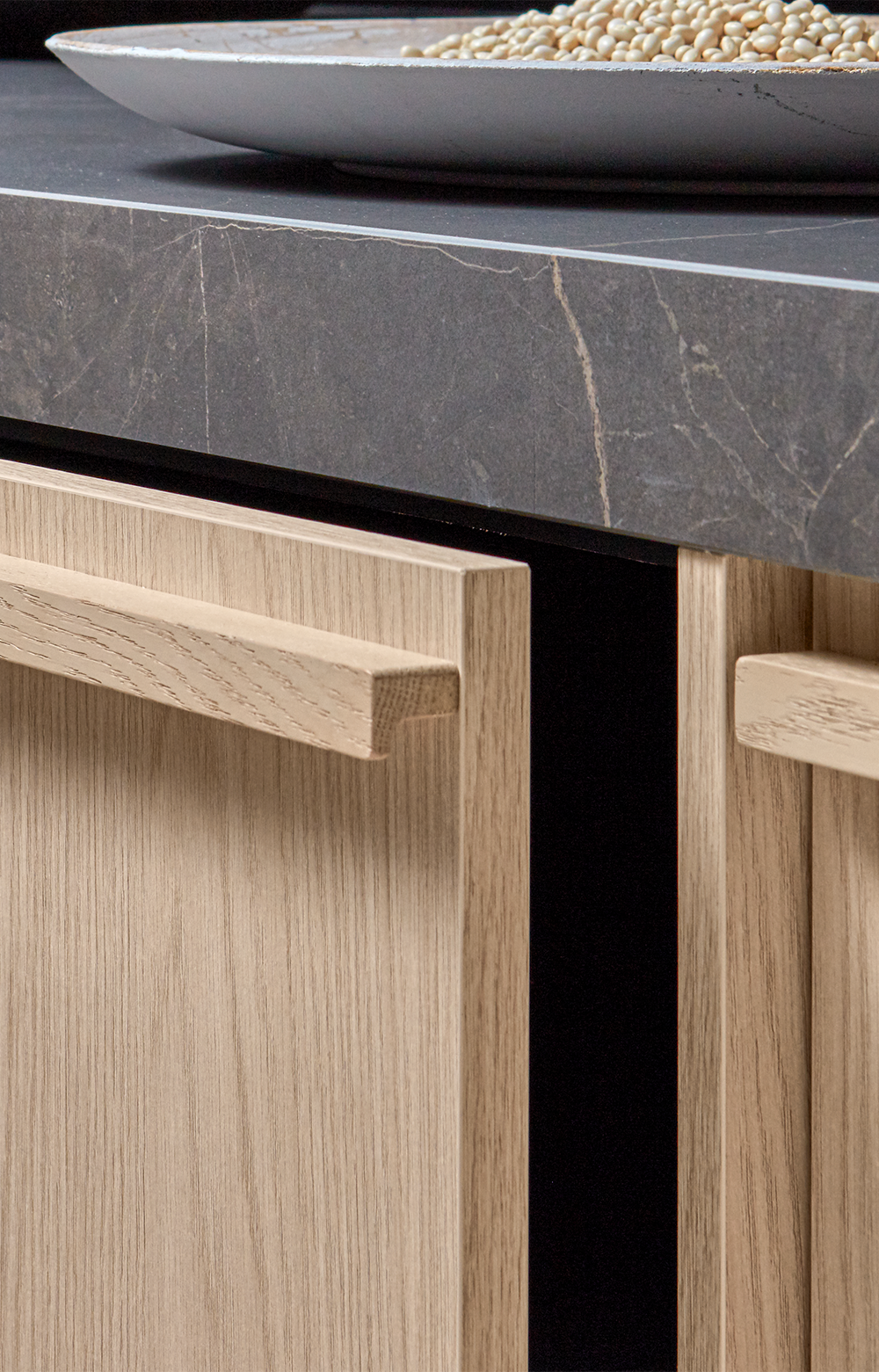
Japandi kitchens feel calm and precisely planned. Fronts are reduced in design, transitions are harmonious, and handles are subtle or discreetly integrated. This creates a tidy overall impression.
Order as part of the design
A Japandi kitchen thrives on clarity. That is why closed storage solutions, good internal organisation and carefully chosen open elements all play an important role.
Typical colours and materials
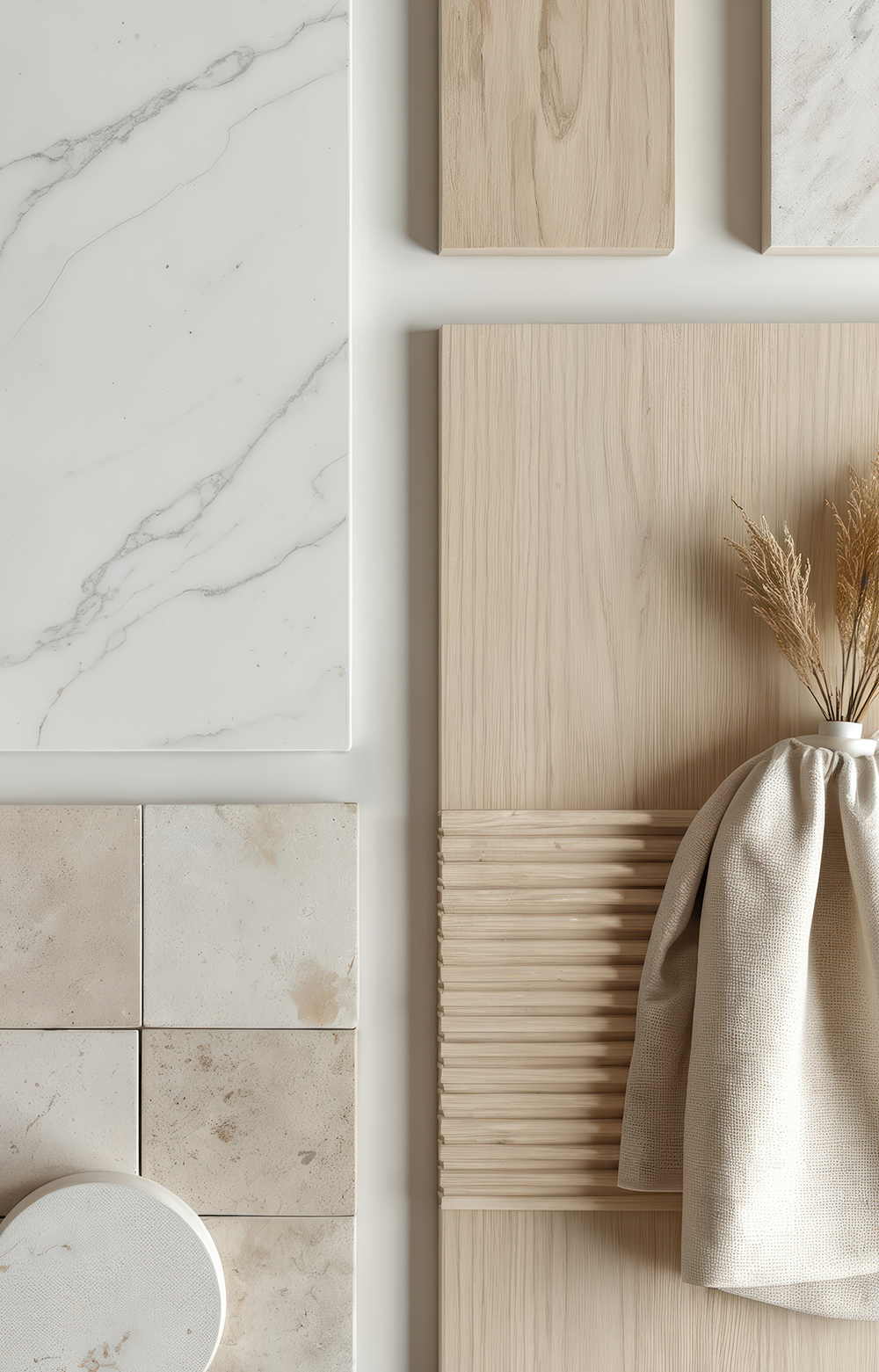
If you are planning a Japandi kitchen, it is worth choosing colours and materials with particular care. What matters is not the number of materials, but their balance. Wood brings warmth, matt surfaces create calm, and Organic Glass or ceramic adds a clear, premium feel.
Colours
Wool white, Angora grey, Sahara beige or pebble grey are particularly suitable. They lend your kitchen a sense of calm and combine well with natural materials.
Materials
Wood with a calm grain, matte lacquered surfaces, organic glass, ceramic or stone looks, or fine metal accents are particularly popular in a Japandi kitchen.
Planning tips for a Japandi kitchen
1. Start with a calm base
Choose fronts and worktops that create a harmonious overall look. Strong contrasts can disturb the calm effect.
2. Use wood deliberately
Wood is a key element in the Japandi style. Natural veneer fronts with a calm grain work especially well, bringing warmth into the kitchen.
3. Plan storage carefully
To keep the kitchen feeling light and uncluttered, as much as possible should be stored away elegantly. Order is part of the style concept here.
4. Use open elements sparingly
Open shelves or display cabinets can create lightness – but only in the right measure. Too much openness quickly feels restless.
5. Plan lighting with intention
Warm lighting supports the calm atmosphere. It highlights materials, creates depth and makes the kitchen feel more homely.
Who is a Japandi-style kitchen suitable for?
A Japandi-style kitchen is especially suitable for people looking for a kitchen that:
- feels modern, but not cold
- is premium and timeless in design
- conveys calm and order
- combines comfort with clarity
This style works particularly well in open-plan kitchens, because it creates a harmonious link between cooking and living. But Japandi can also work beautifully in smaller spaces if storage, lighting and materials are planned in a balanced way.
Conclusion
A Japandi kitchen is more than just an interior trend. It combines natural materials, soft colours and clear design to create a space that feels modern, calm and long-lasting. If you are looking for a kitchen that looks premium while still feeling pleasantly understated, the Japandi style is an especially convincing solution. The key lies in the right balance of reduction, warmth and everyday practicality.
A Japandi kitchen reveals its full effect best when you experience it with all your senses. In a kitchen showroom near you, you can get a feel for the materials, the spatial effect and the planning of your new kitchen.